


2016.09.06 Tao Tao 浏览次数:
CoStone Everest Fund was launched in 2011. The capital market fluctuated in the past 5 years, but 6 portfolios of CoStone Everest Fund IPOed, 2 listed through backdoor, 1 queued for IPO and 1 queued for backdoor listing. All the 19 portfolios secured the exit path.
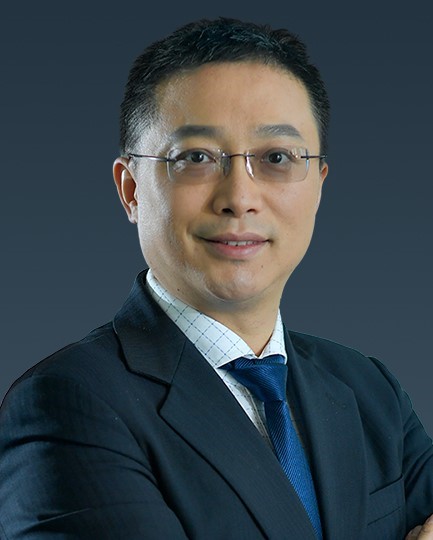
Tao Tao,CoStone Capital partner,investment Committee member of CoStone Everest Fund
CoStone Everest Fund was launched in 2011. The capital market fluctuated in the past 5 years, but 6 portfolios of CoStone Everest Fund IPOed, 2 listed through backdoor, 1 queued for IPO and 1 queued for backdoor listing. All the 19 portfolios secured the exit path.
2011: Consummate Investment Solution
The Everest Fund was raised in 2011H2, and we immediately operated the existing reserve projects. At the same time, we have started to resume the portfolios of CoStone Wuhu Fund, a PE fund raised by CoStone Capital at the end of 2009 and fully invested in 2011H1.
CoStone Wuhu invests in growth equities, especially to grab ”late-stage opportunities. The launch of GEM (Growth Enterprise Market) in 2009 set off national PE craze, leaving CoStone Wuhu to slog it out in this wave.
In2011H2, CoStone Everest invested in Soling(002766.SZ), Kangxin New Materials(600076.SH), Silk Road (300556.SZ), Omnijoi (300528.SZ), Asymchem Laboratories (002821.SZ), etc. Now these projects have been successfully directly or indirectly listed in the capital market, which reflects our improvement in the industrial layout. In one year, about 300 million yuan was invested by the CoStone Everest.
2012: Focus on kernel and risk control
In 2012, with the convening of the 18th National Congress of the CPC, we have strengthened our determination to restructure China's economy. We recognize that the concept of consumption upgrading will replace advanced manufacturing and become the main battleground for PE investment, which has both growth potential and anti-risk capability. In this year, CoStone Everest continued to follow the strategy of leaning towards industries related to consumption upgrading, successively investing in enterprises such as Jialin Pharmaceutical, Sunho Pharmaceutical(430017.SZ), Oppo Lighting(603515.SH), Tongfu Food, etc. At the same time, it also continued to set foot in manufacturing enterprises related to new energy and integration of three networks. CoStone Everest threw money about ¥420 million in 2012.
2013: Self-Reform
In 2013, CoStone Capital also carried out a firm reform. The investment team changed from the original geographical division to the industry division, and established six industry groups, covering the fields of consumption, media, medicine, agricultural industrialization, new materials, energy conservation and environmental protection. Instead of sweeping the streets and digging enterprises, the investment team conducted industry research and discovered investment opportunities. In the end, we eliminated the industry group and reclassified it into three major categories: consumption, TMT and healthcare. So far, CoStone Capital has invested more than ¥3 billion in TMT and ¥3 billion in healthcare, and CoStone Capital has committed to being the organizer of the equity investment industrial chain.
2014: value-added services
In 2014, CoStone Everest invested in a well-known pharmaceutical listed company, Conba(600572.SH), which played an active supporting role in the M&A of Guizhou Best. It will be an important new direction for PE to obtain investment opportunities through assisting listed companies to M&A actively. Since then, CoStone capital has formed several M&A teams, and the M&A business has become an important field.
In 2014, CoStone Everest has entered the project exit period. In addition to strengthening the supervision of the enterprise by the project manager, colleagues in the post-investment department have also started independent project visits and analysis to further strengthen the post-investment activities.
At the same time, we strive to develop value-added services for the project, and M&A has become the mainstream service. Since CoStone Wuhu Huachang project, CoStone Capital has been actively providing value-added services to sort out M&A strategies and find appropriate M&A targets, as well as assisting in due diligence, negotiation, transaction structure design and even financing.
2015-2016: Harvest Time
Capital markets have been volatile in 2015. In 2016, CoStone Everest has finally attracted the attention of investors with its excellent performance. CoStone Everest has invested ¥1.4 billion in total and invested 19 projects in total. By the end of May 2016, six projects of CoStone Everest have been withdrawn, with a total allocation of nearly ¥360 million, accounting for 25.5% of the paid-in amount.
Although the transformation of China's economy and the volatility of the capital market add uncertainty to the withdrawal of PE funds, under the care of the government, China's capital market still maintains abundant liquidity, which provides sufficient capital support and valuation support for Chinese enterprises. What’s more, the focus has shifted from the consumer upgrading to the more specific sectors, such as automobile aftermarket, entertainment, e-commerce and healthcare. China's 250 million middle class, whose shifting needs are sure to create a wave of high-growth companies. Thinking about the allocation of PE in terms of timing based on the macroeconomic situation, is precisely because it fails to understand the unique appeal of the investment.
We firmly believe that entrepreneurship is a scarce resource in our society, and what investment focuses on is entrepreneurs. Just as Zhang Wei, chairman of CoStone Capital, said, "Only entrepreneurship is the root for investors to get a hundredfold return." The success of CoStone Everest is also because we have invested these outstanding entrepreneurs.
Since the founding of CoStone Capital 15 years ago, many investors have continued to invest in CoStone Capital, fully grasping China economical vein in the past 10 years. We all believe that the future will be better
This article is a review of the investment strategies of CoStone Everest Fund in its first 5 years, was written by Tao Tao and was published in Securities Times.
Rewritten by Jiang Qinyu, Edited by Du Zhixin, Li Yunzhen
过去一年,牛市重启,科技领航。
正如我在2024年10月所说的那样,“924”的行情并不是一个反弹,而是一个反转,自那以后,中国资本市场经历了一个从低估到价值回归的过程。
当上证指数来到10年最高点,“易中天”一年翻几倍,“寒王”市值一度突破6000亿,其他科技股也动辄百倍PE、百亿估值,有人贪婪,有人恐惧,还有人问我:科技股存在估值泡沫吗?
我说,这是一个时代的饥渴与焦虑,在资本市场中的投射。如果你理解这一点,你就不会对当前科技投资的热潮感到困惑。
投资与宏观经济无关,但确与地缘政治有关。
中美关系决定了未来几十年的投资,地缘政治极大构建了我们这个时代的饥渴与焦虑,深刻重塑了我们的投资行为。
中国的饥渴与焦虑是什么?第四次工业革命的大幕已然开启,第三次工业革命的短板却还未补齐,时不我待!
所以当有人疑惑,为什么国产算力芯片企业,技术难以望英伟达之项背,却有这么高的估值?为什么英伟达的PE只有50倍,“中国版英伟达”却有300倍?
我说,逻辑刚好反了,正是因为短期内追不上英伟达,这些企业才被赋予了更高的战略性定价,而且差距越大,战略价值越高。越得不到越饥渴,越追不上越焦虑,如果有一天,我们的算力芯片完全突破了,估值反倒会下来。
中国最美的自然风景在哪里?我认为很大一部分分布在横断山脉及其周边,梅里雪山、玉龙雪山、贡嘎山、四姑娘山、九寨沟等等都在这里。巨大的落差,结构性断裂,形成了壮丽的风景。
硬科技投资就是这样,技术代差、能力断点、体系缺口——难度的跃迁,带来了估值的跃迁,成功之后也将带来回报的跃迁。
这一逻辑,除了算力芯片领域,在存储芯片、商业航天等中国与外国差距比较大的领域,也都有所体现。
正因如此,从2016年开始,基石资本就果断将投资重点聚焦到硬科技、新兴产业和生命科学与健康三个领域——在这个语境下,“硬科技”特指那些与美国有代差的重要产业。
得益于这样的前瞻性,基石资本很早就在半导体、人工智能和机器人等关键领域实现了全产业链布局。
展望未来,科技进步与产业升级是无尽的前沿,硬科技产业差距的缩小亦无法一蹴而就,技术创新和国产替代的双重机会之窗才刚刚打开,任重道远,未来可期。
作为投资机构,基石资本将继续投身于每个时代的饥渴与焦虑,顺着时代的张力前行,向最难、也最重要的方向延伸。